


Apex Hunter: Animal Shooting
CozyCraft
I spent time with Apex Hunter: Animal Shooting as a casual hunting game, and my first impression was that it aims for a more focused experience than the usual quick-tap mobile title. Its central idea is simple: track wild animals through natural-looking environments and work toward becoming the top hunter. That gives each session a clear purpose without asking me to learn a complicated set of rules before I can play.
The game is made by CozyCraft and is free to download. It sits in the casual games category, although its hunting theme and Teen content rating make it a little more mature in tone than a purely family-friendly reflex game. The store summary sets the expectation of realistic environments, so I approached it looking for atmosphere as much as quick entertainment. It works best when I treat each attempt as a short hunt rather than expecting a deep simulation.
How Apex Hunter feels during ordinary play
The strongest part of the experience is its immediate premise. I do not need a long explanation to understand what I am meant to do: observe the environment, locate an animal, line up the shot, and try to make a clean decision before the moment passes. That straightforward loop makes the game easy to pick up after a break, which is exactly what I want from a casual title on a phone.
At the same time, the realistic presentation changes the mood. This is not simply a colorful target gallery where every object exists to be tapped. The natural setting encourages me to slow down and look before acting. That small pause gives the game more tension than its basic controls might suggest. A rushed shot feels like a mistake, while a carefully timed one feels earned.
In my experience, the game is most enjoyable in short, attentive sessions. It is suitable for a spare moment when I want something more involving than an endless runner but less demanding than a full strategy game. I would not describe it as a background activity, because the hunting premise rewards concentration. If I am distracted by messages or trying to play while doing something else, the central appeal becomes much weaker.
Related News






Speed expectations: quick to understand, deliberate in use
The perceived speed comes from how quickly I can get into the action, not from a frantic pace. The basic concept is readable almost immediately, and that lowers the barrier for new players. I can begin playing without first studying a large collection of menus or complicated systems. For a casual game, that is an important strength.
Once a hunt begins, however, the rhythm is more deliberate. The realistic setting asks me to scan the scene and choose when to act. Players who want constant explosions, rapid score chains, or nonstop movement may find this restrained. The game’s appeal depends on whether a slower moment before the shot feels like suspense or like waiting.
I also found that this pacing makes the title easier to revisit. A short session does not require the same commitment as a long campaign, and the central objective remains understandable even when I have not played recently. That makes it a practical choice for a commute, a waiting room, or a brief evening break, provided I can give the screen my attention.
Gallery
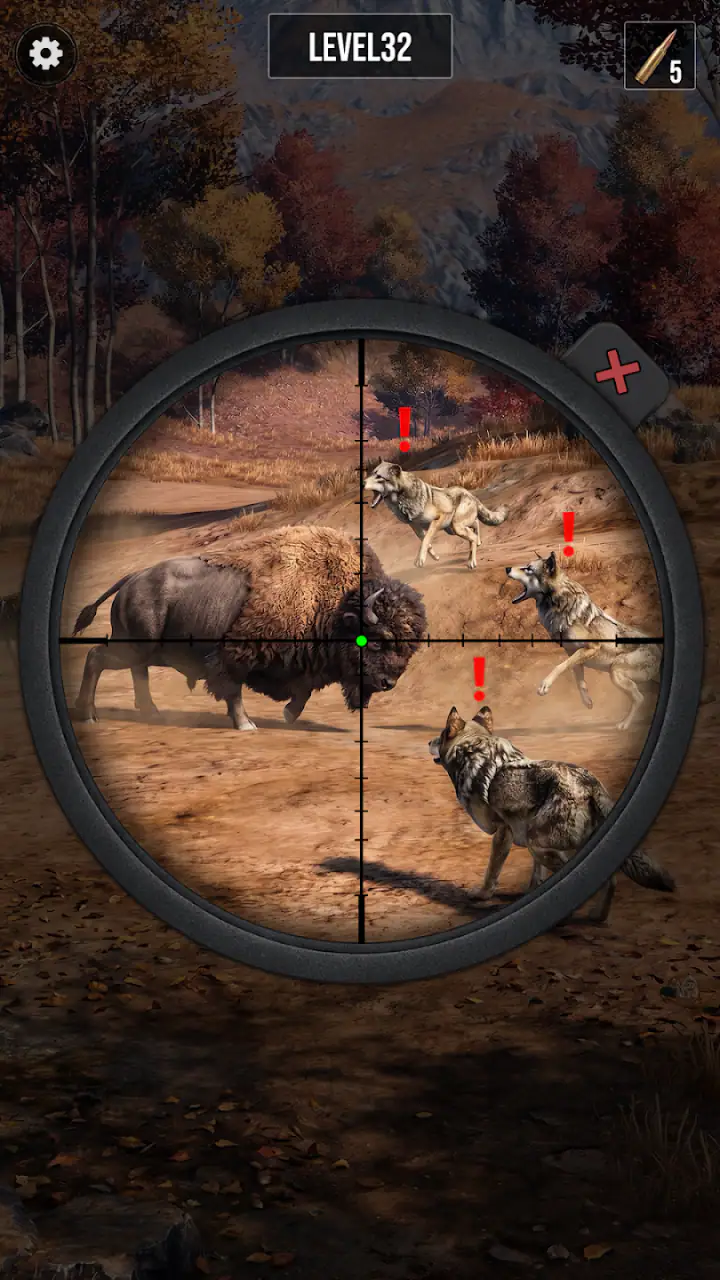
A useful approach is to decide before starting whether I want a quick attempt or a more careful hunt. When I play impatiently, I focus too much on finishing and lose the environmental element that separates this from a basic shooting gallery. When I accept the slower rhythm, the game feels more coherent and the realistic presentation has a clearer purpose.
Heavy-use moments and what they demand from the phone
The most demanding moments are likely to be the scenes where the environment carries much of the visual impression. Natural surroundings can make a mobile game feel more immersive, but they can also place more pressure on a device than a flat menu-driven game. I pay most attention to how quickly the scene appears, whether aiming remains comfortable, and whether the phone becomes noticeably warm during longer play.
I would avoid judging the experience from the first few seconds alone. A game can feel perfectly responsive in a simple opening scene and become less comfortable when several visual elements compete for attention. For that reason, I prefer testing a few consecutive hunts rather than deciding immediately after launch. This is especially relevant on older phones, where available memory and graphics capability can affect how pleasant a visually focused game feels.
There is also a practical battery trade-off. A game built around realistic environments generally asks the display and processor to do more than a minimalist puzzle. I would not choose it as a battery-saving option for a long trip. Before playing away from a charger, I would lower screen brightness to a comfortable level, close other demanding apps, and avoid keeping the game open unnecessarily between sessions.
Those habits are not essential for every player, but they make sense here because the game’s value is tied to visual focus. A dim screen makes it harder to read the environment, while a crowded phone can make transitions feel less comfortable. The best balance is a bright enough display, a cool device, and short sessions that preserve attention.
Stability, interruptions, and recovering from a broken session
Reliability matters more in a game based on timing than in a title where progress can be paused at any moment. If an interruption occurs while I am lining up a shot, the lost moment can matter more than a lost few seconds in a puzzle. I therefore treat the game as something to play when I am unlikely to receive a call or need to switch tasks immediately.
For everyday use, I would begin with a short test session after installing or updating it. That gives me a chance to see how the current version behaves on my phone before committing to a longer play period. The current version is 1.1.8, so players should keep their installation current through the normal app store process rather than relying on an older copy.
Recovery is another reason to keep expectations realistic. If I leave a casual game during an active hunt, I do not assume that the exact moment will remain available when I return. I prefer to finish a short attempt before switching to another app. That workflow reduces frustration and fits the game’s compact-session design better than treating it like a continuously running world.
For a realistic daily scenario, imagine playing during a lunch break. I would start only if I had enough uninterrupted time for one focused attempt, keep notifications from covering the screen, and stop at a natural endpoint instead of forcing a second round. That approach makes the title feel dependable as a small break activity, even though it is not the right tool for multitasking.
Device constraints and choosing the right setting
The minimum operating-system requirement is Android 8.0, which gives the game a broad starting point among Android users. That does not mean every compatible phone will deliver the same comfort. Operating-system compatibility tells me the game can be installed on an eligible device, while the quality of play still depends on the phone’s age, available storage, memory, display, and graphics hardware.
On a newer or reasonably capable phone, the visual setting should have a better chance of feeling like an advantage rather than a burden. On an older device, I would be more cautious about long sessions and watch for heat, stutter, or faster battery drain. If the game becomes uncomfortable during a longer attempt, shorter sessions are a sensible adjustment; there is little benefit in pushing the phone simply to extend a casual hunt.
Storage planning is also worth considering before installation. The game is free, but free does not mean costless in practical terms: it still uses space, battery, and attention. I would make sure the phone has comfortable free storage and avoid installing it on a device already struggling with a crowded app library. A clean device environment can help with general responsiveness, even though it cannot transform older hardware into a gaming phone.
The Teen rating is relevant when deciding whether it belongs on a shared family device. Parents should consider the hunting theme and the intended age classification rather than assuming that the casual label means it is designed for young children. For adult players, the rating also helps set the tone: this is a hunting-focused game, not a harmless animal-viewing app.
Where it stands beside familiar casual alternatives
Compared with match-three games, endless runners, and idle titles, this game asks for more visual attention and offers less value as passive entertainment. Those alternatives are often easier to play while half-distracted. Here, the environment and timing are the point, so looking away can undermine the whole session.
Compared with a full hunting simulator, though, the casual format is an advantage. I can understand the objective quickly and get into a hunt without treating the game as a long technical hobby. Players seeking extensive equipment management, detailed progression, or a highly realistic simulation may prefer a more specialized hunting game. Players who mainly want a readable mobile activity with a hunting theme may appreciate the lighter commitment here.
The important trade-off is atmosphere versus depth. The realistic environments give the game a stronger identity than a generic target shooter, but the simple premise may not satisfy someone who needs a large variety of systems to stay interested. I would recommend it to a player who enjoys observation and timing, not to someone choosing a game primarily for story, social competition, or complex customization.
Practical ways to get more from each hunt
My first tip is to separate observation from action. Instead of moving immediately toward the shot, I take a moment to read the scene and identify what deserves my attention. This sounds obvious, but it changes the game from random tapping into a small decision-making exercise. It also helps reduce the frustration of acting too quickly.
My second tip is to use short sessions as a performance check. If the phone feels smooth and comfortable after one attempt, I can decide whether to continue. If it is warming up or the controls feel less precise, I stop early. This is more useful than assuming that a free casual game will automatically be light on resources.
Third, I would avoid playing in conditions that make the screen hard to read. Outdoor glare, very low brightness, or a dirty display can make the realistic environment harder to interpret. A stable grip and a clear view matter because the game’s challenge depends on noticing what is happening rather than simply pressing a large button.
Finally, I would treat each completed attempt as its own small activity. That mindset prevents the game from feeling repetitive too quickly and makes it easier to put down when real life interrupts. It also suits the casual category better than chasing an unnecessarily long session.
Who should play, and who should skip it
I think the game is a good match for people who want a free, focused mobile game with a hunting theme, realistic surroundings, and a simple objective. It is especially suitable for players who enjoy pausing to observe before making a move. The strong average rating of 4.9 from around 1.4 thousand ratings suggests that the concept has connected well with its audience, while more than 100 thousand installs show that it has reached a meaningful number of players.
I would be less likely to recommend it to someone who wants a completely relaxing game with no tension, because the hunting setup naturally creates pressure around timing. I would also steer away players who need deep simulation systems or constant action. The game’s strengths are focus and accessibility, not a broad catalog of mechanics.
The review count, at roughly 160 reviews, gives prospective players additional written feedback to browse alongside the overall score. I would still read those comments with attention to device-specific experiences, since performance and comfort can vary considerably between phones. A high rating is encouraging, but it should not replace a realistic assessment of what kind of play the person actually enjoys.
My performance verdict
CozyCraft has made a casual hunting game that is easy to understand but not entirely mindless. The realistic environments give each attempt a distinct mood, and the deliberate pace makes careful observation more important than rapid tapping. I like that it can fit into a short break, yet still asks me to stay engaged while a hunt is underway.
Its limitations are closely connected to those strengths. The slower rhythm will not suit players who expect constant action, and the visual focus means I would be careful about older hardware, battery use, and interruptions. It is also not a substitute for a detailed hunting simulator. The right comparison is a focused casual game with a hunting identity, not a full recreation of the sport.
For me, the best reason to try it is the balance between quick accessibility and a more thoughtful moment-to-moment rhythm. It is free, supports Android 8.0 and later, and carries a Teen rating, so the practical decision is mostly about whether the theme and device demands fit the player. If I wanted a calm puzzle or an idle game, I would choose something else. If I wanted a short, visually attentive hunt that I could return to without a steep learning curve, Apex Hunter: Animal Shooting is an easy recommendation to make.
The game was released on April 29, 2026, and its current version is 1.1.8. Those details matter less than the actual fit: install it when you have a compatible Android phone, enough room for another game, and a few uninterrupted minutes to judge the rhythm for yourself. My final view is positive, with one clear condition: choose it for focused casual play, not for background gaming or heavyweight simulation.
FAQs for Apex Hunter: Animal Shooting
What is Apex Hunter: Animal Shooting about?
Apex Hunter: Animal Shooting is a hunting-themed action game focused on tracking and shooting wild animals across different environments. From my experience, the gameplay combines exploration, aiming, weapon selection, and mission-based challenges. Players generally need to identify targets, position themselves carefully, and complete objectives accurately rather than simply firing continuously. It is designed for users who enjoy casual hunting simulations with an arcade-style approach.
Can Apex Hunter: Animal Shooting be played offline?
The game may allow some hunting missions to be played without a constant internet connection, which is useful when traveling or when mobile data is limited. However, certain features can depend on online access, including advertisements, updates, cloud-related functions, events, or other connected services. I recommend launching the game once while connected to the internet and checking which modes remain available before relying on it for completely offline play.
Is Apex Hunter: Animal Shooting suitable for children?
Apex Hunter: Animal Shooting includes realistic hunting themes, firearms, and animals being targeted, so parents should review the game before allowing younger children to play. The controls may be easy to understand, but the subject matter is not appropriate for every age group. Store age ratings, advertising content, and optional purchases can also vary by device and region, so parental supervision is advisable.
Does the game include in-app purchases or advertisements?
Like many free-to-download mobile shooting games, Apex Hunter: Animal Shooting may use advertisements and optional in-app purchases to support its free model. Ads can appear between missions or when players choose bonus rewards, while purchases may provide currency, equipment, upgrades, or other conveniences. Before downloading, check the Google Play or App Store listing for current pricing, payment details, and available parental controls.
What devices are required to run Apex Hunter: Animal Shooting smoothly?
The exact requirements depend on the Android or iOS version available in your region, as well as later updates released by the developer. A relatively recent phone or tablet with sufficient free storage should provide a better experience, especially during visually detailed hunting scenes. Older devices may experience longer loading times, reduced graphics quality, or occasional performance issues, so verify compatibility on the official store page first.
Pros
- Realistic animal behavior makes each hunting encounter feel unpredictable.
- Wide range of weapons offers different approaches to completing hunts.
- Detailed environments create an immersive outdoor hunting atmosphere.
- Short missions are convenient for quick gaming sessions.
- Progression rewards encourage players to improve their shooting skills.
Cons
- Some missions may feel repetitive after extended play.
- Accurate aiming can be difficult on smaller phone screens.
- Higher-level equipment may require considerable grinding.
- Wildlife variety may feel limited compared with larger hunting games.
- Performance can vary on older or less powerful devices.


